OUR SERVICES

Attenuation Tank Liner Testing

Attenuation Tank Liner Integrity Testing

UKRS provides independent inspection, integrity testing and verification of attenuation tank liners and associated geomembrane systems.

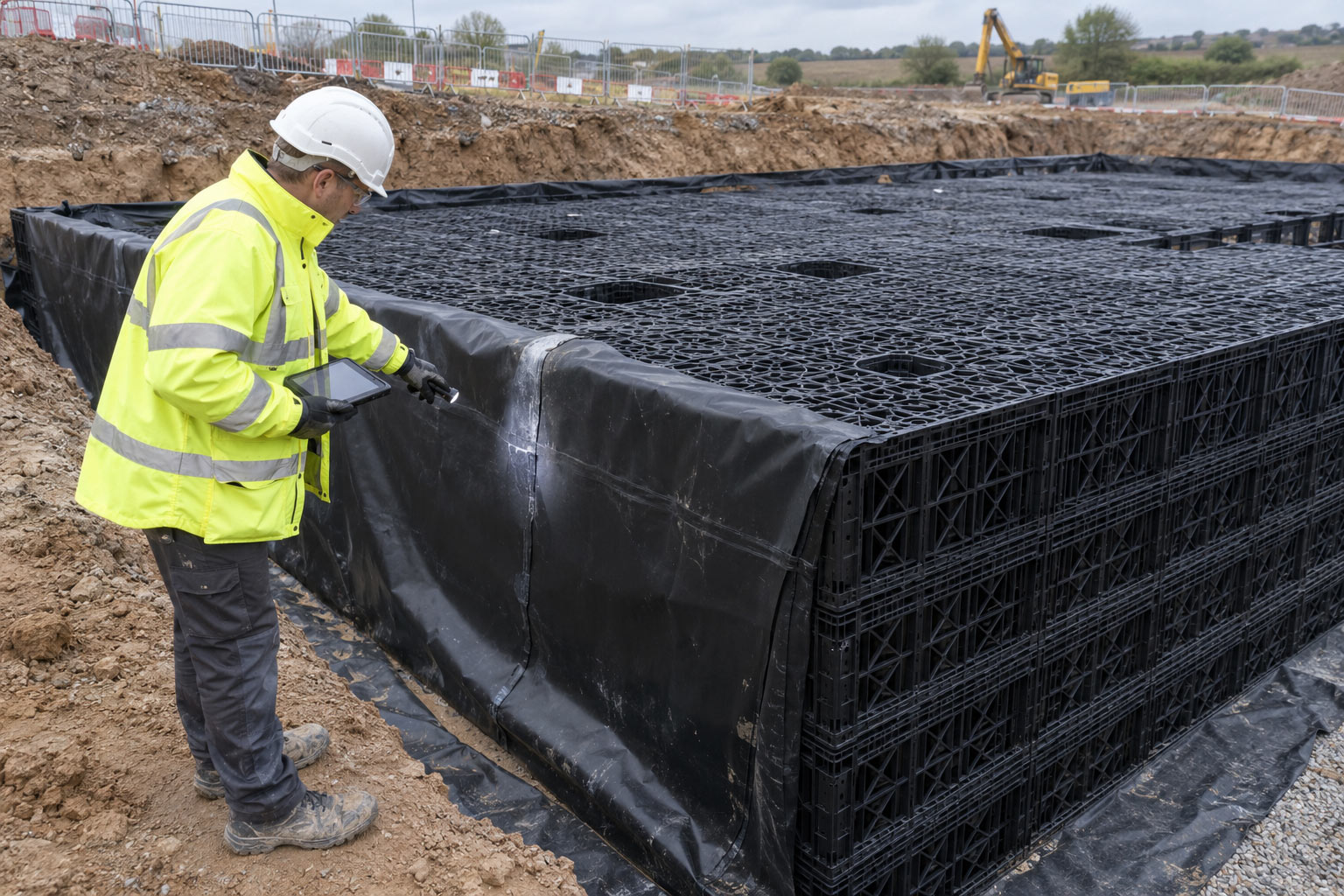
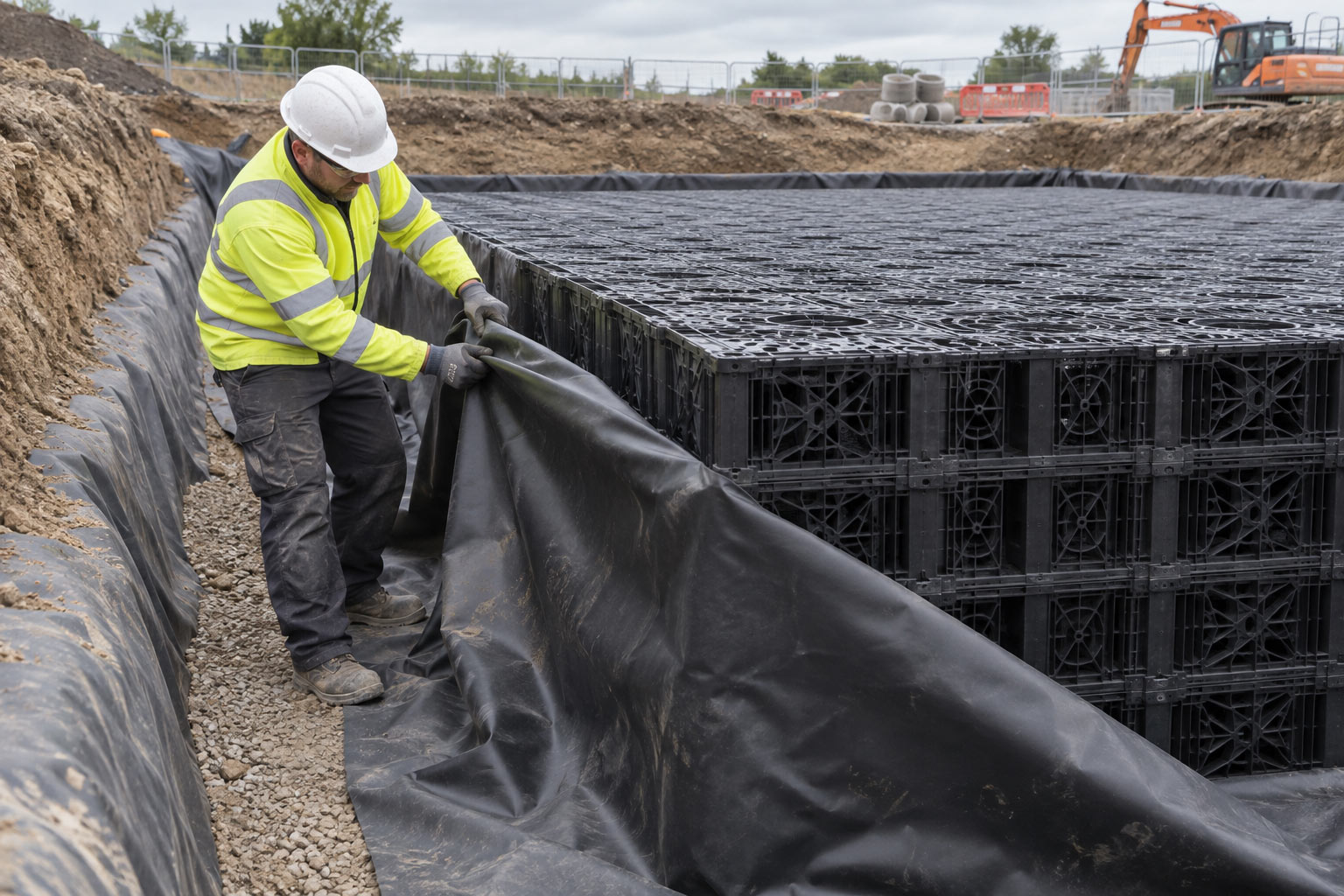
Attenuation tanks temporarily retain stormwater before releasing it at a controlled rate. The liner must therefore remain continuous so that stored water is retained and released in accordance with the drainage design.

Why Test an Attenuation Tank Liner?

Defects may occur during handling, installation or the placement of tank components.

Common issues include:

  • Punctures and tears.
  • Incomplete welded seams.
  • Contaminated jointing surfaces.
  • Poorly formed corners.
  • Defects around inlet and outlet pipes.
  • Inadequate terminations.
  • Damage caused by geocellular crates.
  • Damage during the installation of protection layers.
  • Defects caused by follow-on construction activities.

Once the liner has been covered, locating and repairing defects can become difficult and expensive.

Independent integrity testing allows defects to be identified while the membrane remains accessible.

Independent Third-Party Verification

CIRIA guidance applies the principle that geomembrane verification within SuDS installations should be undertaken independently of the barrier installer.

UKRS provides an impartial assessment of the installation and records defects, repairs and retesting before the system is covered.

Our Liner Testing Services

Our services can include:

  • Review of liner drawings and specifications.
  • Review of installation and welding procedures.
  • Inspection of the prepared formation.
  • Visual inspection of the installed liner.
  • Inspection of seams and welded joints.
  • Inspection of corners, upstands and terminations.
  • Inspection of inlet, outlet and penetration details.
  • Integrity testing using a suitable method.
  • Recording and marking of identified defects.
  • Inspection and retesting of repaired areas.
  • Photographic quality assurance records.
  • Preparation of an independent verification report.

When Should Testing Take Place?

Testing should be undertaken once the liner and associated details are complete but before the system is covered.

The liner should be:

  • Clean.
  • Accessible.
  • Free from standing water where required by the test method.
  • Complete at corners and terminations.
  • Detailed around inlets, outlets and penetrations.
  • Protected from unnecessary site traffic.

The installation contractor should remain available to complete repairs so that retesting can be undertaken without delaying the construction programme.

Verification Report

Following testing, UKRS can issue a report containing:

  • Project information.
  • Liner system details.
  • Areas inspected.
  • Testing methodology.
  • Site observations.
  • Photographic evidence.
  • Defects identified.
  • Repair records.
  • Retesting results.
  • Inspection limitations.
  • Conclusions and recommendations.

The report provides a quality assurance record for the client, drainage designer, contractor and approving authority.

Applications

Our liner integrity testing services can support:

  • Geocellular attenuation tanks.
  • Stormwater storage systems.
  • SuDS installations.
  • Infiltration prevention liners.
  • Retention and detention systems.
  • Containment lagoons.
  • Below-ground geomembrane systems.
  • Specialist drainage structures.

Arrange Testing Before the Liner Is Covered

Provide the tank drawings, liner specification, dimensions and installation programme to receive a quotation.